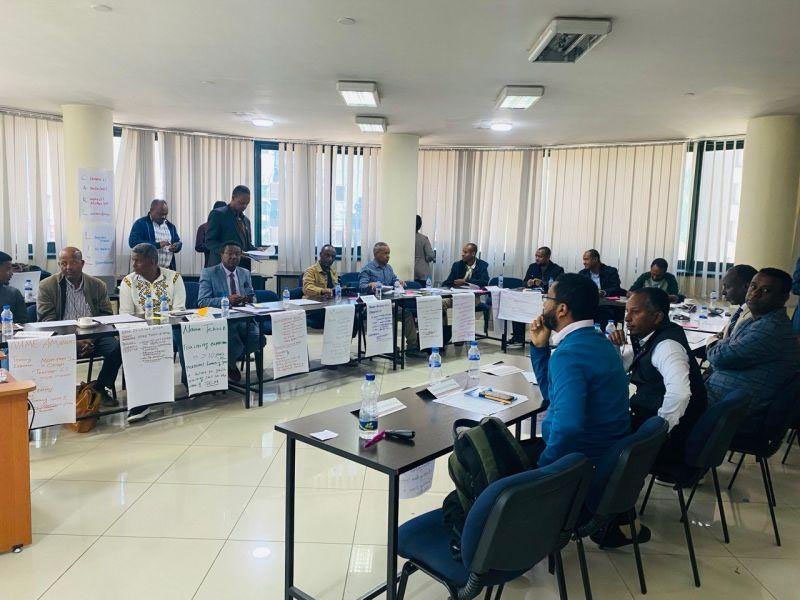
Strengthening institutions, systems, and people to ensure that infrastructure, services, and programs are sustainable, accountable, and locally owned.
In many fragile contexts, development investments underperform due to limited institutional capacity, weak governance systems, and insufficient human capital. EAGint addresses this gap by embedding capacity development and governance support into project design and implementation.
Recognizing that long-term impact depends not only on physical assets but also on institutional capability, we translate investments into durable outcomes, reduce dependency, and enable true localization.
Institutional needs assessments, stakeholder mapping, gender/inclusion analysis, and donor alignment.
Tailored curricula, scenario-based learning design, and seamless integration with live operations.
Classroom/blended delivery, embedded advisors, and hands-on support during project implementation.
Institutionalization of systems, knowledge transfer, and strategic exit/sustainability planning.
Capacity building for ministries, public-sector reform, and governance support for decentralized administrations.
Capacity development embedded in humanitarian programs, training linked to UN standards, and support to national counterparts.
Institutional strengthening for local NGOs, PPP governance frameworks, and skills transfer for local workforces.
Zero-tolerance safeguarding framework ensuring safe learning environments. We apply ISO-aligned training systems with rigorous MEAL integration.
We mitigate high turnover and political instability through realistic pacing, strong stakeholder ownership, and institutional embedding of skills.
Directly contributing to SDGs 4, 5, 8, 16, and 17. Localization, gender inclusion, and marginalized group representation are core outcomes, not by-products.
EAGint combines technical delivery with institutional strengthening. We prioritize local ownership and sustainability across all fragile and post-conflict contexts.